Sustainability
12 Things Buyers Must Check Before Choosing a Marine Ingredient Supplier

Admin
Admin

One wrong supplier decision in marine ingredients can mean delayed shipments, a failed regulatory audit, or — at worst — a product recall that takes years of brand equity with it. This is a category where the gap between what a supplier claims and what they can actually document is wider than most buyers expect.
Collagen peptides, chitosan, ossein, glucosamine — these materials come from biological sources that vary by species, origin, season and processing history. They are governed by overlapping regulatory frameworks across the EU, UK, US and Middle East. And a glossy brochure tells you very little about whether a supplier can deliver consistently at scale.
At Nizona Marine Products, we work with procurement teams across the UK, Europe, the Middle East, Japan, Australia and the Philippines. This guide reflects what those buyers ask when qualifying a new marine ingredient partner — the questions that have repeatedly proven to matter most, and the gaps that most often surface too late.
Use this as your working framework. Modify the weighting for your application. And if you want to see how NMP maps against it point by point, reach out at nizonamarineproducts.com/contact.
1. Can They Produce Current Certifications Within 48 Hours?
This is the first filter, and it eliminates more suppliers than most buyers expect.
Ask for current certification documents — not copies from two years ago, not renewal-pending letters. The actual, dated, in-scope originals. For marine ingredients entering food, nutraceutical or health product supply chains, the standard certifications are:
– EU food safety compliance, including EFSA Novel Food or EC 1334/2008 where relevant
– Halal certification — non-negotiable for Middle Eastern and most Southeast Asian markets
– ISO 22000 or equivalent food safety management standard
– FSSAI approval for materials produced in India
– HACCP documentation and GMP records
– US FDA facility registration under 21 CFR Part 117 for any US-destined supply
A supplier who cannot produce these within two working days of a request is not audit-ready. That becomes your problem the moment your own customer audits you.
NMP holds EU food safety compliance alongside Halal and other key certifications, with documentation available on request. See nizonamarineproducts.com/about-us. |
2. Are Their COAs Batch-Specific or Generic?
A Certificate of Analysis is the most basic quality document in ingredient procurement. It is also one of the most frequently misrepresented. A surprising number of marine ingredient suppliers issue generic COAs that apply to no specific batch — essentially a template with numbers filled in.
What you need is a batch-specific COA showing protein content, moisture, ash, pH, particle size where relevant, microbial counts, and the analytical method used for each parameter. Alongside that, request a full Technical Data Sheet (TDS) and, for complex materials, a Safety Data Sheet (SDS).
These documents should come from third-party accredited laboratory testing — not internal QC alone. If a supplier has no independent verification of their own quality data, that is a red flag worth investigating before you commit to any volume.
3. How Far Back Does Their Traceability Chain Actually Go?
This is where marine ingredient procurement gets genuinely complex, and where most supplier conversations stay too shallow.
Unlike synthetic ingredients with a defined synthesis route, marine materials come from biological sources — fish skins and scales, shrimp shells, crustacean by-products — that are inherently variable in origin, season and processing history. A reliable supplier must be able to tell you exactly where their raw material comes from.
The questions to ask:
– What species are used, and is the source aquaculture or wild-catch?
– Where is the processing facility, and what certifications does it hold?
– Is raw material sourcing governed by a written supplier qualification programme?
– How far back does the traceability chain go — one step or all the way to harvest?
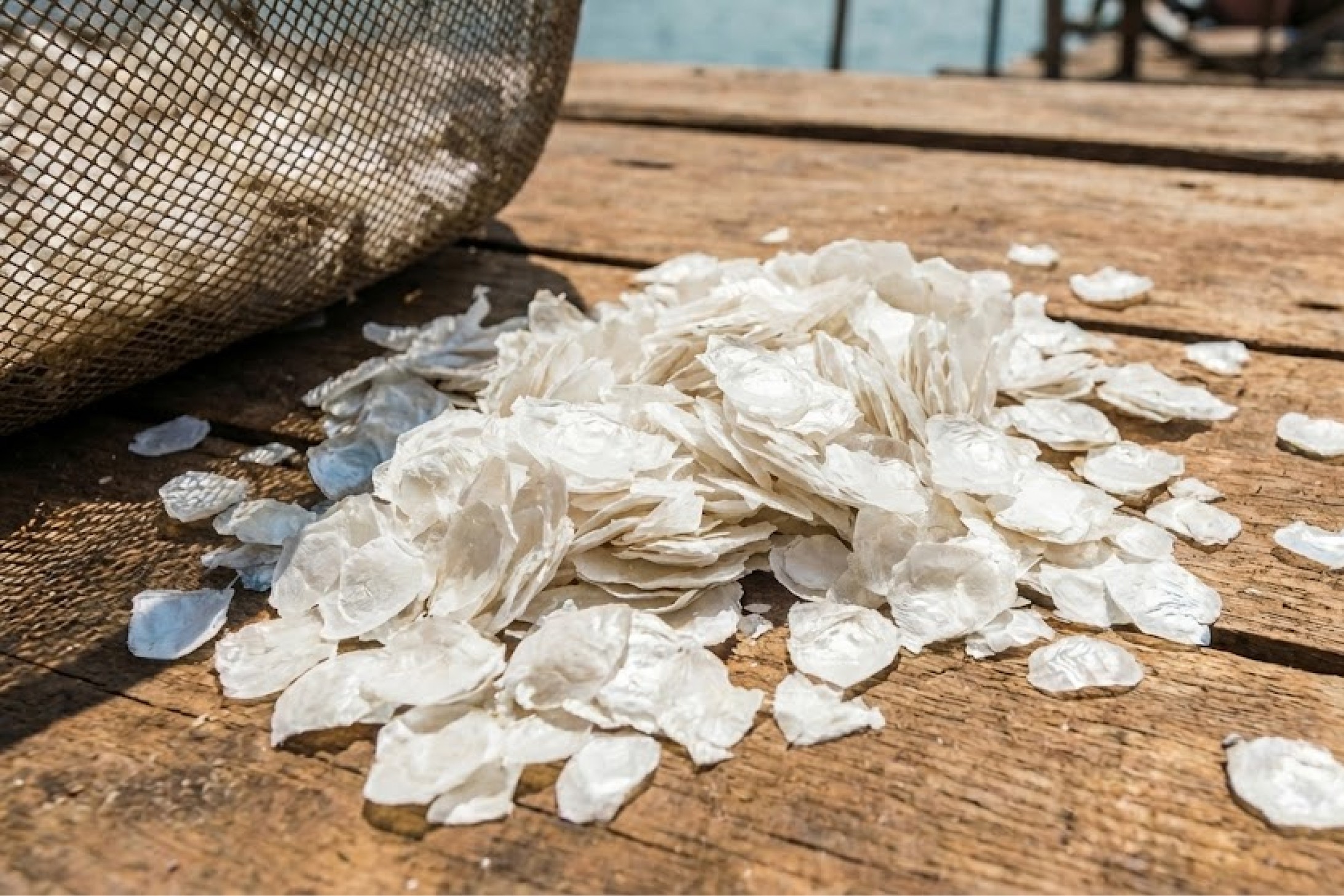
At NMP, we work exclusively with controlled raw material streams — primarily fish scales from freshwater aquaculture species Labeo Rohita (Rohu) and Labeo Catla (Catla), and shrimp shells from certified processors. That level of origin specificity is what makes consistent batch output possible. Learn more at nizonamarineproducts.com/collagen-peptide. |
4. What Does Their Batch-to-Batch Data Actually Show?
Certification tells you a quality system exists. Batch data tells you whether it works in practice.
Request batch-to-batch comparison data across at least six to twelve recent production runs for the specific product you are buying. Parameters to compare: protein content variance, moisture levels, colour, odour grading, and microbiological results. Look for consistency, not just compliance.
Go beyond the final test results. Ask about in-process controls. How are raw materials checked on intake? Are there checks during enzymatic hydrolysis or extraction? What happens when a batch fails a specification? The answers reveal whether quality is genuinely embedded in the process or just applied at the end of the line.
5. Can They Provide Molecular Weight Data for Collagen and DD% for Chitosan?
This is the most commonly skipped technical checkpoint — especially among buyers sourcing marine collagen peptides or chitosan for the first time. These are not commodities. Their performance in your formulation depends on specific physicochemical properties.
For marine collagen peptides:
The critical parameter is molecular weight distribution, typically reported in Daltons (Da) via gel permeation chromatography (GPC) or SDS-PAGE. Bioavailable collagen peptides for human nutrition are generally in the 1,000–5,000 Da range. Collagen for wound care or biomedical applications may require a completely different profile. A supplier who cannot provide molecular weight data is selling you collagen hydrolysate of unknown functional character.
For chitosan:
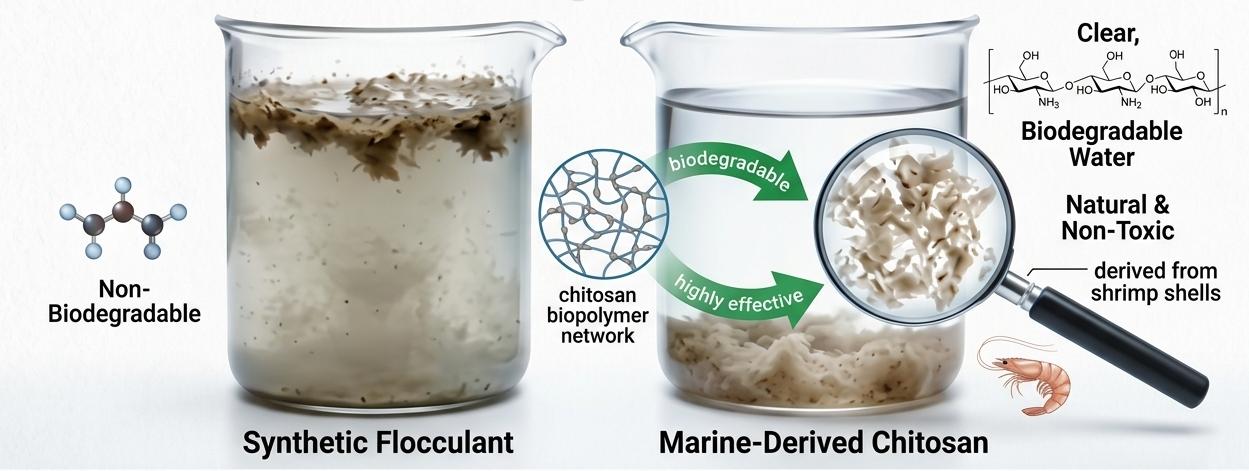
The equivalent parameter is degree of deacetylation (DD%), which determines charge density, solubility and bioactivity. Applications in water treatment, agriculture and wound care each have different optimal DD% ranges — typically 70–95%. Always request viscosity grade data alongside DD%, confirmed by independent analytical testing.
NMP supplies both collagen peptide and chitosan with full specification sheets including molecular weight distribution and DD% values. Explore at nizonamarineproducts.com/collagen-peptide and nizonamarineproducts.com/chitosan. |
6. Are Heavy Metals Tested by an ISO-Accredited External Lab?
Marine-derived materials can accumulate heavy metals from aquatic environments — lead, cadmium, mercury, arsenic, and in some markets chromium. This is a documented concern that regulators across all major markets take seriously. Every serious supplier tests for these in every production batch.
But the testing method matters as much as the result. Ask whether heavy metal analysis is conducted by an ISO/IEC 17025-accredited external laboratory or handled entirely in-house. External accreditation is the standard that holds up in a regulatory audit or a customer complaint investigation.
Acceptable limits vary by market. EU food safety frameworks and the European Pharmacopoeia, the US FDA and California Proposition 65, and GCC markets following Codex Alimentarius guidelines each set their own thresholds. Know which apply to your target market before evaluating results.
7. Can They Map Their Documentation to Your Specific Regulatory Market?
The same marine ingredient can have very different compliance obligations depending on whether it enters the EU as a food ingredient, the US as a cosmetic input, or the Gulf as a nutraceutical. Suppliers with active export programmes across these regions have already done much of this mapping — which saves your compliance team considerable time.
Key frameworks to verify for your target market:
– EU: Novel Foods Regulation (EU) 2015/2283, EC 1333/2008 for food additives, REACH for non-food applications
– US: FDA 21 CFR, GRAS status for food ingredients, cGMP compliance
– UK: UK FSA post-Brexit alignment with EU frameworks, plus GB-specific requirements
– Middle East: GCC Standardisation Organisation (GSO) standards, Halal compliance, Saudi SFDA or MOH approvals
Ask your prospective supplier to map their product documentation against the specific requirements of your target market — not as a generic exercise, but for the exact material and application category you are sourcing.
8. Are Their MOQ and Scalability Commitments Realistic?
Minimum order quantities in marine ingredients vary enormously. Large commodity processors often impose MOQs that are impractical for mid-sized brands or formulators at early development stages. At the same time, a supplier with no minimum order requirement but constrained production capacity may not grow with you as volumes increase.
During evaluation, go beyond the current MOQ. Ask whether they have successfully ramped volumes for existing customers. Ask what their annual production capacity looks like, and how capacity is allocated across their customer base. That last point matters especially during any industry-wide supply squeeze, when some customers inevitably get deprioritised.
NMP operates with flexible MOQ policies and is designed to support customers from pilot scale through to commercial volumes. Contact us at nizonamarineproducts.com/contact to discuss your requirements. |
9. What Are Their Actual Logistics Capabilities — Cold Chain, Lead Times, Documentation?
Hydrolysed collagen peptides in particular can be sensitive to temperature and humidity in transit. Understanding a supplier's logistics capabilities is not an afterthought — it is core due diligence.
Ask specifically whether they offer DDP (Delivered Duty Paid) or CIF (Cost, Insurance and Freight) Incoterms, and whether they have direct experience handling customs clearance into your specific import market. Lead times in marine ingredients are not always predictable due to seasonal raw material availability — ask for honest historical data across the past twelve months, and whether they hold safety stock for key products.
Export documentation is equally critical. Delays in commercial invoices, certificates of origin, health certificates, Halal certificates or phytosanitary documentation are among the most common causes of costly port holds. Ask whether they have a checklist-driven documentation process or manage this ad hoc.
10. Can They Provide Real Customer References — Not Website Testimonials?
This one sounds obvious, but it is frequently skipped when a supplier looks technically strong on paper. References matter — specifically, actual conversations with procurement or quality managers at companies who have been buying from this supplier for at least eighteen to twenty-four months.
The questions worth asking a reference contact: How consistent has on-time delivery been? How quickly were quality issues addressed when they came up? How did the supplier respond during supply disruptions? Did their documentation hold up in third-party audits?
Industry credibility can also be assessed through trade association memberships, published technical content, and presence at major trade events. A supplier with a substantive online presence — technical articles, transparent process information, published case studies — is generally more accountable and easier to work with than one operating from a purely transactional posture.
11. Do They Have Real R&D Capability or Just Standard Grades?
This point separates commodity resellers from genuine development partners. If your formulation roadmap requires a specific molecular weight range, a particular viscosity grade of chitosan, or a marine protein fraction with defined amino acid ratios, you need a supplier with real scientific infrastructure.
During evaluation, ask whether in-house application technologists can engage on your specific formulation challenges. Ask whether they have the analytical capability to run characterisation studies on your behalf. Ask about prior co-development work with brand owners or research institutions. Ask whether they are open to joint development agreements or technology transfer arrangements.
12. How Transparent Are They About ESG, Sourcing and Sustainability?
Sustainability is no longer a soft consideration in marine ingredient procurement. Retailer requirements, investor ESG frameworks and tightening EU and UK regulatory standards are making it a hard commercial requirement.
For marine ingredients specifically, the questions worth asking: What share of raw materials comes from industrial by-product streams versus primary catch? What is their wastewater treatment protocol? Do they publish any carbon footprint data for their production processes? Are they working toward MSC, ASC or equivalent third-party sustainability verification?
The answers matter not just for your own ESG reporting, but because sourcing from by-product streams — rather than primary catch — is increasingly a differentiating claim your own customers will want to see.
How to Use This Checklist Without Wasting Time
Not every point carries equal weight for every application. A buyer sourcing food-grade collagen peptides for a UK nutraceutical brand will weight Points 1, 6 and 7 more heavily than a buyer sourcing chitosan for agricultural biostimulants. Use this as a starting framework, then calibrate based on your product category and target market.
Consider staging the evaluation. A desk-based review of certifications, COAs, TDS documents and sustainability reports can eliminate most weak candidates before you invest time in facility visits or detailed technical conversations. Save the more intensive steps for the two or three suppliers who genuinely merit deeper scrutiny.
Running through this in a structured way — rather than a series of ad hoc supplier conversations — also signals to shortlisted suppliers that you are a serious, well-organised buying organisation. The best suppliers are selective about who they work with. That matters.
Working With Nizona Marine Products
We are not the right fit for every buyer, and we say that honestly. If you need a price-led commodity transaction with no interest in technical collaboration or sustainability provenance, there are larger processors better suited to that.
But if you are looking for a marine ingredient partner who can answer every point on this checklist clearly — who can engage at a technical level with your formulation team, who operates from verified by-product streams, and who is genuinely committed to traceable, documented supply — that is the kind of relationship we are built for.
Our product range covers the most commercially significant marine ingredient categories:
– Hydrolysed marine and bovine collagen peptides — nizonamarineproducts.com/collagen-peptide
– Chitosan and shrimp derivatives — nizonamarineproducts.com/chitosan
– Fish ossein and protein intermediates — nizonamarineproducts.com/ossein
Each product is manufactured from verified by-product streams using controlled enzymatic hydrolysis and extraction processes. Each comes with full documentation. Our team supports technical queries, formulation challenges and regulatory dossier preparation for your target markets.
To see how NMP maps against this checklist — point by point — reach out at nizonamarineproducts.com/contact. We are ready for that conversation.
One wrong supplier decision in marine ingredients can mean delayed shipments, a failed regulatory audit, or — at worst — a product recall that takes years of brand equity with it. This is a category where the gap between what a supplier claims and what they can actually document is wider than most buyers expect.
Collagen peptides, chitosan, ossein, glucosamine — these materials come from biological sources that vary by species, origin, season and processing history. They are governed by overlapping regulatory frameworks across the EU, UK, US and Middle East. And a glossy brochure tells you very little about whether a supplier can deliver consistently at scale.
At Nizona Marine Products, we work with procurement teams across the UK, Europe, the Middle East, Japan, Australia and the Philippines. This guide reflects what those buyers ask when qualifying a new marine ingredient partner — the questions that have repeatedly proven to matter most, and the gaps that most often surface too late.
Use this as your working framework. Modify the weighting for your application. And if you want to see how NMP maps against it point by point, reach out at nizonamarineproducts.com/contact.
1. Can They Produce Current Certifications Within 48 Hours?
This is the first filter, and it eliminates more suppliers than most buyers expect.
Ask for current certification documents — not copies from two years ago, not renewal-pending letters. The actual, dated, in-scope originals. For marine ingredients entering food, nutraceutical or health product supply chains, the standard certifications are:
– EU food safety compliance, including EFSA Novel Food or EC 1334/2008 where relevant
– Halal certification — non-negotiable for Middle Eastern and most Southeast Asian markets
– ISO 22000 or equivalent food safety management standard
– FSSAI approval for materials produced in India
– HACCP documentation and GMP records
– US FDA facility registration under 21 CFR Part 117 for any US-destined supply
A supplier who cannot produce these within two working days of a request is not audit-ready. That becomes your problem the moment your own customer audits you.
NMP holds EU food safety compliance alongside Halal and other key certifications, with documentation available on request. See nizonamarineproducts.com/about-us. |
2. Are Their COAs Batch-Specific or Generic?
A Certificate of Analysis is the most basic quality document in ingredient procurement. It is also one of the most frequently misrepresented. A surprising number of marine ingredient suppliers issue generic COAs that apply to no specific batch — essentially a template with numbers filled in.
What you need is a batch-specific COA showing protein content, moisture, ash, pH, particle size where relevant, microbial counts, and the analytical method used for each parameter. Alongside that, request a full Technical Data Sheet (TDS) and, for complex materials, a Safety Data Sheet (SDS).
These documents should come from third-party accredited laboratory testing — not internal QC alone. If a supplier has no independent verification of their own quality data, that is a red flag worth investigating before you commit to any volume.
3. How Far Back Does Their Traceability Chain Actually Go?
This is where marine ingredient procurement gets genuinely complex, and where most supplier conversations stay too shallow.
Unlike synthetic ingredients with a defined synthesis route, marine materials come from biological sources — fish skins and scales, shrimp shells, crustacean by-products — that are inherently variable in origin, season and processing history. A reliable supplier must be able to tell you exactly where their raw material comes from.
The questions to ask:
– What species are used, and is the source aquaculture or wild-catch?
– Where is the processing facility, and what certifications does it hold?
– Is raw material sourcing governed by a written supplier qualification programme?
– How far back does the traceability chain go — one step or all the way to harvest?
At NMP, we work exclusively with controlled raw material streams — primarily fish scales from freshwater aquaculture species Labeo Rohita (Rohu) and Labeo Catla (Catla), and shrimp shells from certified processors. That level of origin specificity is what makes consistent batch output possible. Learn more at nizonamarineproducts.com/collagen-peptide. |
4. What Does Their Batch-to-Batch Data Actually Show?
Certification tells you a quality system exists. Batch data tells you whether it works in practice.
Request batch-to-batch comparison data across at least six to twelve recent production runs for the specific product you are buying. Parameters to compare: protein content variance, moisture levels, colour, odour grading, and microbiological results. Look for consistency, not just compliance.
Go beyond the final test results. Ask about in-process controls. How are raw materials checked on intake? Are there checks during enzymatic hydrolysis or extraction? What happens when a batch fails a specification? The answers reveal whether quality is genuinely embedded in the process or just applied at the end of the line.
5. Can They Provide Molecular Weight Data for Collagen and DD% for Chitosan?
This is the most commonly skipped technical checkpoint — especially among buyers sourcing marine collagen peptides or chitosan for the first time. These are not commodities. Their performance in your formulation depends on specific physicochemical properties.
For marine collagen peptides:
The critical parameter is molecular weight distribution, typically reported in Daltons (Da) via gel permeation chromatography (GPC) or SDS-PAGE. Bioavailable collagen peptides for human nutrition are generally in the 1,000–5,000 Da range. Collagen for wound care or biomedical applications may require a completely different profile. A supplier who cannot provide molecular weight data is selling you collagen hydrolysate of unknown functional character.
For chitosan:
The equivalent parameter is degree of deacetylation (DD%), which determines charge density, solubility and bioactivity. Applications in water treatment, agriculture and wound care each have different optimal DD% ranges — typically 70–95%. Always request viscosity grade data alongside DD%, confirmed by independent analytical testing.
NMP supplies both collagen peptide and chitosan with full specification sheets including molecular weight distribution and DD% values. Explore at nizonamarineproducts.com/collagen-peptide and nizonamarineproducts.com/chitosan. |
6. Are Heavy Metals Tested by an ISO-Accredited External Lab?
Marine-derived materials can accumulate heavy metals from aquatic environments — lead, cadmium, mercury, arsenic, and in some markets chromium. This is a documented concern that regulators across all major markets take seriously. Every serious supplier tests for these in every production batch.
But the testing method matters as much as the result. Ask whether heavy metal analysis is conducted by an ISO/IEC 17025-accredited external laboratory or handled entirely in-house. External accreditation is the standard that holds up in a regulatory audit or a customer complaint investigation.
Acceptable limits vary by market. EU food safety frameworks and the European Pharmacopoeia, the US FDA and California Proposition 65, and GCC markets following Codex Alimentarius guidelines each set their own thresholds. Know which apply to your target market before evaluating results.
7. Can They Map Their Documentation to Your Specific Regulatory Market?
The same marine ingredient can have very different compliance obligations depending on whether it enters the EU as a food ingredient, the US as a cosmetic input, or the Gulf as a nutraceutical. Suppliers with active export programmes across these regions have already done much of this mapping — which saves your compliance team considerable time.
Key frameworks to verify for your target market:
– EU: Novel Foods Regulation (EU) 2015/2283, EC 1333/2008 for food additives, REACH for non-food applications
– US: FDA 21 CFR, GRAS status for food ingredients, cGMP compliance
– UK: UK FSA post-Brexit alignment with EU frameworks, plus GB-specific requirements
– Middle East: GCC Standardisation Organisation (GSO) standards, Halal compliance, Saudi SFDA or MOH approvals
Ask your prospective supplier to map their product documentation against the specific requirements of your target market — not as a generic exercise, but for the exact material and application category you are sourcing.
8. Are Their MOQ and Scalability Commitments Realistic?
Minimum order quantities in marine ingredients vary enormously. Large commodity processors often impose MOQs that are impractical for mid-sized brands or formulators at early development stages. At the same time, a supplier with no minimum order requirement but constrained production capacity may not grow with you as volumes increase.
During evaluation, go beyond the current MOQ. Ask whether they have successfully ramped volumes for existing customers. Ask what their annual production capacity looks like, and how capacity is allocated across their customer base. That last point matters especially during any industry-wide supply squeeze, when some customers inevitably get deprioritised.
NMP operates with flexible MOQ policies and is designed to support customers from pilot scale through to commercial volumes. Contact us at nizonamarineproducts.com/contact to discuss your requirements. |
9. What Are Their Actual Logistics Capabilities — Cold Chain, Lead Times, Documentation?
Hydrolysed collagen peptides in particular can be sensitive to temperature and humidity in transit. Understanding a supplier's logistics capabilities is not an afterthought — it is core due diligence.
Ask specifically whether they offer DDP (Delivered Duty Paid) or CIF (Cost, Insurance and Freight) Incoterms, and whether they have direct experience handling customs clearance into your specific import market. Lead times in marine ingredients are not always predictable due to seasonal raw material availability — ask for honest historical data across the past twelve months, and whether they hold safety stock for key products.
Export documentation is equally critical. Delays in commercial invoices, certificates of origin, health certificates, Halal certificates or phytosanitary documentation are among the most common causes of costly port holds. Ask whether they have a checklist-driven documentation process or manage this ad hoc.
10. Can They Provide Real Customer References — Not Website Testimonials?
This one sounds obvious, but it is frequently skipped when a supplier looks technically strong on paper. References matter — specifically, actual conversations with procurement or quality managers at companies who have been buying from this supplier for at least eighteen to twenty-four months.
The questions worth asking a reference contact: How consistent has on-time delivery been? How quickly were quality issues addressed when they came up? How did the supplier respond during supply disruptions? Did their documentation hold up in third-party audits?
Industry credibility can also be assessed through trade association memberships, published technical content, and presence at major trade events. A supplier with a substantive online presence — technical articles, transparent process information, published case studies — is generally more accountable and easier to work with than one operating from a purely transactional posture.
11. Do They Have Real R&D Capability or Just Standard Grades?
This point separates commodity resellers from genuine development partners. If your formulation roadmap requires a specific molecular weight range, a particular viscosity grade of chitosan, or a marine protein fraction with defined amino acid ratios, you need a supplier with real scientific infrastructure.
During evaluation, ask whether in-house application technologists can engage on your specific formulation challenges. Ask whether they have the analytical capability to run characterisation studies on your behalf. Ask about prior co-development work with brand owners or research institutions. Ask whether they are open to joint development agreements or technology transfer arrangements.
12. How Transparent Are They About ESG, Sourcing and Sustainability?
Sustainability is no longer a soft consideration in marine ingredient procurement. Retailer requirements, investor ESG frameworks and tightening EU and UK regulatory standards are making it a hard commercial requirement.
For marine ingredients specifically, the questions worth asking: What share of raw materials comes from industrial by-product streams versus primary catch? What is their wastewater treatment protocol? Do they publish any carbon footprint data for their production processes? Are they working toward MSC, ASC or equivalent third-party sustainability verification?
The answers matter not just for your own ESG reporting, but because sourcing from by-product streams — rather than primary catch — is increasingly a differentiating claim your own customers will want to see.
How to Use This Checklist Without Wasting Time
Not every point carries equal weight for every application. A buyer sourcing food-grade collagen peptides for a UK nutraceutical brand will weight Points 1, 6 and 7 more heavily than a buyer sourcing chitosan for agricultural biostimulants. Use this as a starting framework, then calibrate based on your product category and target market.
Consider staging the evaluation. A desk-based review of certifications, COAs, TDS documents and sustainability reports can eliminate most weak candidates before you invest time in facility visits or detailed technical conversations. Save the more intensive steps for the two or three suppliers who genuinely merit deeper scrutiny.
Running through this in a structured way — rather than a series of ad hoc supplier conversations — also signals to shortlisted suppliers that you are a serious, well-organised buying organisation. The best suppliers are selective about who they work with. That matters.
Working With Nizona Marine Products
We are not the right fit for every buyer, and we say that honestly. If you need a price-led commodity transaction with no interest in technical collaboration or sustainability provenance, there are larger processors better suited to that.
But if you are looking for a marine ingredient partner who can answer every point on this checklist clearly — who can engage at a technical level with your formulation team, who operates from verified by-product streams, and who is genuinely committed to traceable, documented supply — that is the kind of relationship we are built for.
Our product range covers the most commercially significant marine ingredient categories:
– Hydrolysed marine and bovine collagen peptides — nizonamarineproducts.com/collagen-peptide
– Chitosan and shrimp derivatives — nizonamarineproducts.com/chitosan
– Fish ossein and protein intermediates — nizonamarineproducts.com/ossein
Each product is manufactured from verified by-product streams using controlled enzymatic hydrolysis and extraction processes. Each comes with full documentation. Our team supports technical queries, formulation challenges and regulatory dossier preparation for your target markets.
To see how NMP maps against this checklist — point by point — reach out at nizonamarineproducts.com/contact. We are ready for that conversation.
Related Blogs



































Whatever we produce,
We must fully use
Contact Us



Phone No:
022 4924 0706
+91 9730007882

Email Address:

Location:
923, IJMIMA complex, MDP Road, Malad West, Mumbai – 400064, Maharashtra, India.
71/17, Topsia Road(South), Near Millat Nagar Masjid, Kolkata: 700046, West Bengal, India.
© 2026 Nizona Marine Products Private Limited. All Rights Reserved.
Whatever we produce,
We must fully use
Contact Us
Phone No:
022 4924 0706
+91 9730007882
Email Address:
Location:
923, IJMIMA complex, MDP Road, Malad West, Mumbai – 400064, Maharashtra, India.
71/17, Topsia Road(South), Near Millat Nagar Masjid, Kolkata: 700046, West Bengal, India.
© 2026 Nizona Marine Products Private Limited. All Rights Reserved.
Whatever we produce,
We must fully use
Contact Us
Phone No:
022 4924 0706
+91 9730007882
Email Address:
Location:
923, IJMIMA complex, MDP Road, Malad West, Mumbai – 400064, Maharashtra, India.
71/17, Topsia Road(South), Near Millat Nagar Masjid, Kolkata: 700046, West Bengal, India.
© 2026 Nizona Marine Products Private Limited. All Rights Reserved.